SAP Picking, Packing, and Post Goods Issue (PGI) – VL01N, VL02N, VL03N Full Tutorial
An outbound delivery is the step in order-to-cash where goods are prepared for shipping. This guide shows how to create the delivery with VL01N, pick and pack the items, and post goods issue, using the original screenshots. It explains each stage, the values used, what PGI does, common mistakes, troubleshooting and how the delivery leads to billing. If you run into any errors while following along, feel free to send a screenshot to pramod@learntosap.com for help.
✅ SAP Picking, Packing, and PGI Process Explained Using VL01N, VL02N, VL03N
Creating Picking and Packing and Post Goods Issue: A Step-by-Step Guide
Before we dive into the intricacies of picking and packing, let's briefly understand what an outbound delivery is in the context of SAP SD. An outbound delivery is a crucial step in the order-to-cash process, where the goods are prepared for shipping to the customer. This process involves various steps, including order creation, picking, packing, and shipping.
In simple words, the sales order says what the customer wants. The outbound delivery is the document that tells the warehouse what to prepare, and it is the document on which the goods are picked, packed and finally issued. This guide follows one order through that whole path with transactions VL01N, VL02N and VL03N, using the original screenshots, and then explains what each step really does in the system.
📋 Where Picking, Packing and PGI Fit in Order-to-Cash
The delivery process sits in the middle of the order-to-cash cycle. The table shows each stage and the document it creates.
| Stage | What Happens | Document / Transaction |
|---|---|---|
| Sales order | The customer's order is entered and confirmed. | VA01 |
| Outbound delivery | The delivery is created for the shipping point. | VL01N |
| Picking | Items are taken from storage for the delivery. | Picking list / pick quantity |
| Packing | Picked items are packed into handling units. | Pack button in the delivery |
| Post goods issue | Goods leave, stock reduces and accounting is updated. | PGI in the delivery |
| Billing | The customer is invoiced. | VF01 |
Because each stage uses the document before it, an error early in the chain, such as a wrong shipping point, will show up again later. That is why the steps below are followed in order.
📝 How to Do Picking and Packing in SAP: Picking
✅ Picking
Order Confirmation: The picking process begins with an order confirmation. Once an order is received and confirmed, it's time to pick the items from the warehouse. SAP SD allows you to automate this process by generating picking lists based on the orders. These lists contain information on the items to be picked, their quantities, and the storage location.
Picking reflects what the warehouse team physically does: walking to the storage location, taking the right quantity of the right material and bringing it to the staging area. In the system, the picked quantity is recorded against the delivery item. If the picked quantity is lower than the ordered quantity, the delivery shows a partial pick, and the missing amount must be handled before the delivery is complete.
📦 Packing: Preparing for Shipment
✅ Packing Materials
Before you can pack the items, you need to gather the necessary packing materials, such as boxes, tape, labels, and padding. SAP SD allows you to maintain a record of these materials and their availability in the system.
✅ Packing Instructions
You can define packing instructions for different products and scenarios. These instructions can include information on how to pack items, which materials to use, and any special handling requirements.
✅ Packing Process
Once the picking is confirmed, it's time to pack the items according to the instructions. This step ensures that the products are protected during transit and that they are organized efficiently within the shipping container. SAP SD provides tools for generating packing lists and labels.
✅ Packing Confirmation
Similar to picking, packing also requires confirmation. This step ensures that the packing process is completed correctly and that the items are ready for shipment.
📝 Outbound Delivery Transactions at a Glance
Go to the following transaction codes:
| Transaction | Purpose |
|---|---|
| VL01N | Create outbound delivery. |
| VL02N | Modify outbound delivery. |
| VL03N | Display outbound delivery. |
| VL06O | Monitor outbound deliveries. |
| VL09 | Reverse a goods issue. |
| VA03 | Display the sales order and its document flow. |
🔧 What You Need Before You Create the Delivery
- A confirmed sales order, here order number 20210, that is ready for delivery.
- A shipping point, here DR01, that is assigned to the plant and the order.
- Stock of the material, here 200072, in the plant and storage location.
- Packing materials and packing instructions, if the material is to be packed in handling units.
- Authorization to create deliveries and post goods issue.
If one of these is missing, the delivery can still be created in some cases, but picking or goods issue will stop later with an error message.
🔧 Step-by-Step: Create Outbound Delivery, Pack and Post Goods Issue
Following Path
Go to: Logistics Execution → Outbound Process → Outbound Delivery → Create → VL01N.
Select the shipping point and the order. Shipping Point: DR01. Selection Date: 11-09-2023. Order No: 20210.
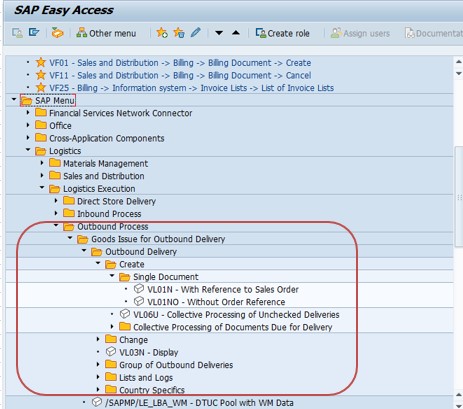
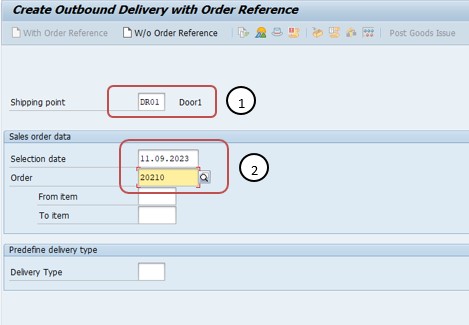
Create outbound delivery. Check the items, quantities and the storage location, then continue.
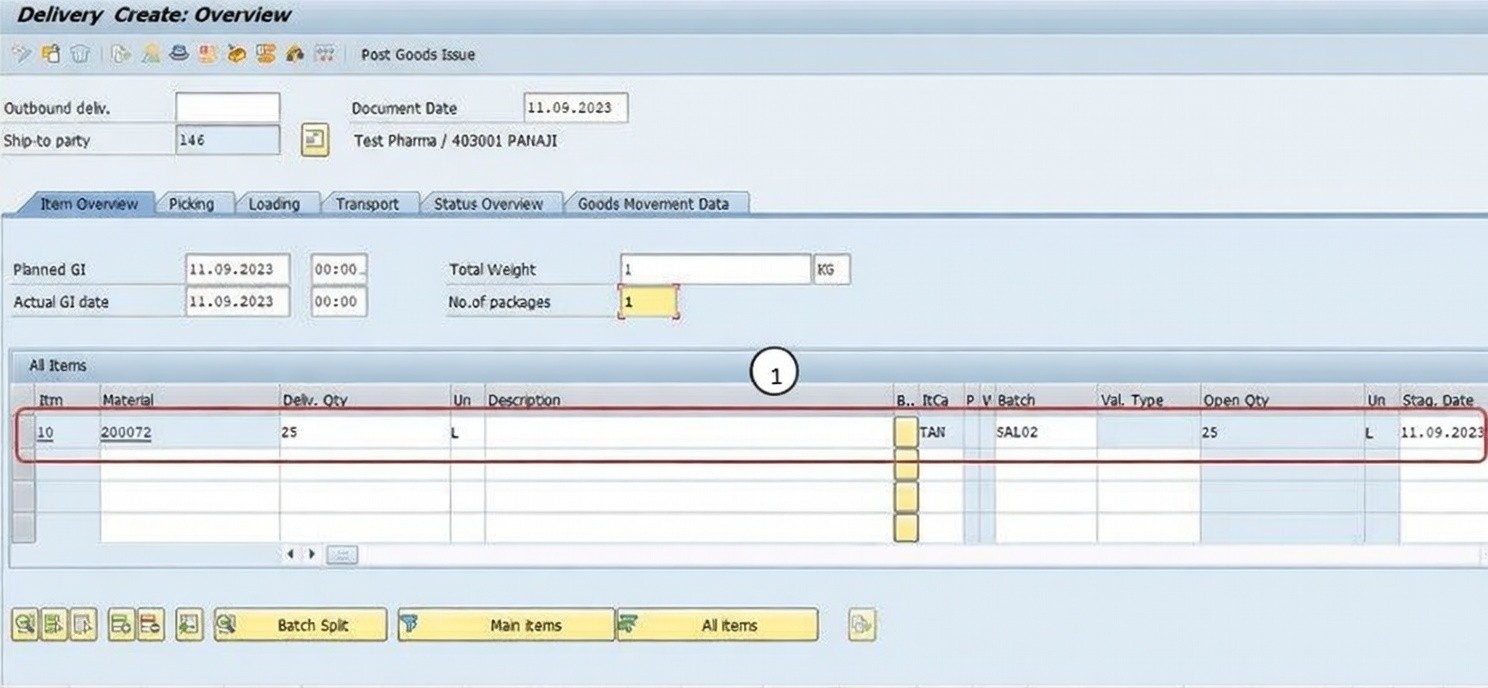
Processing of handling units for outbound delivery. Select the Pack button. Select Yes. Select the material number for packing – 200072.
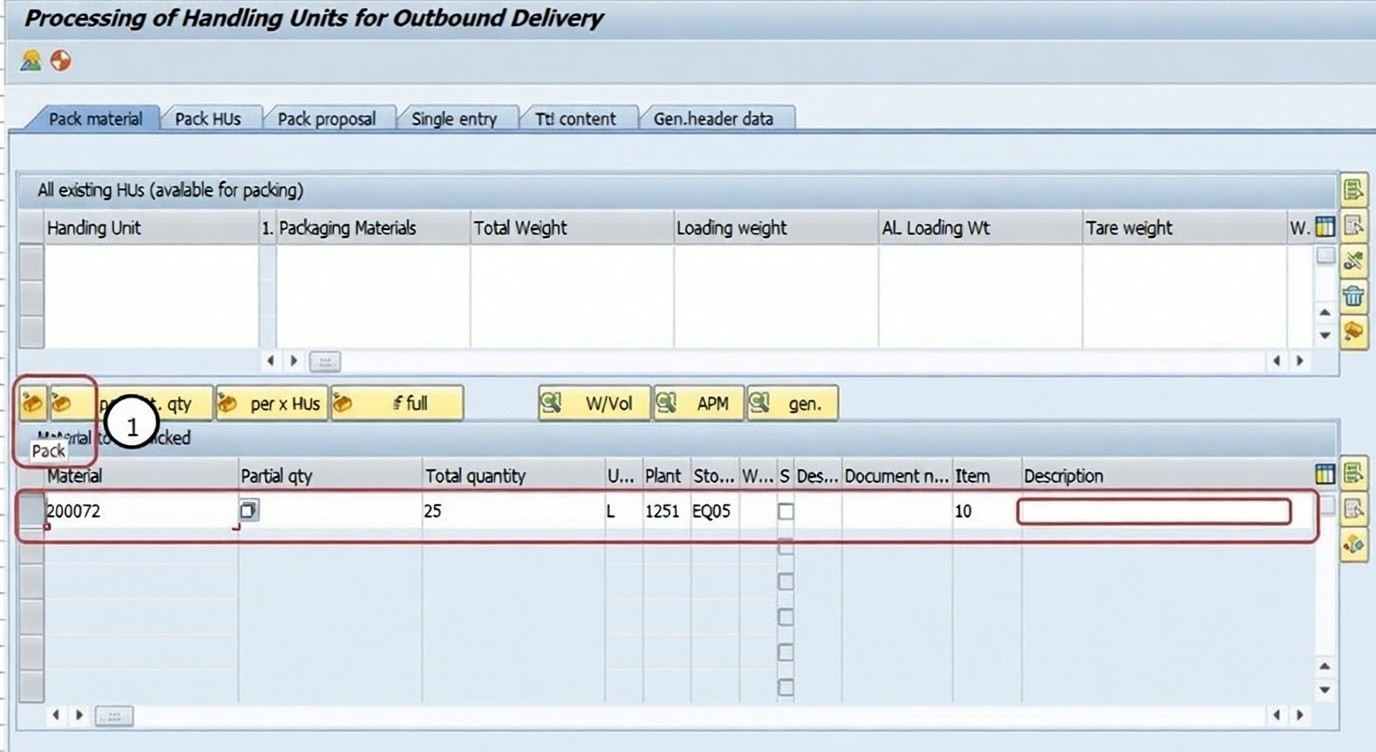
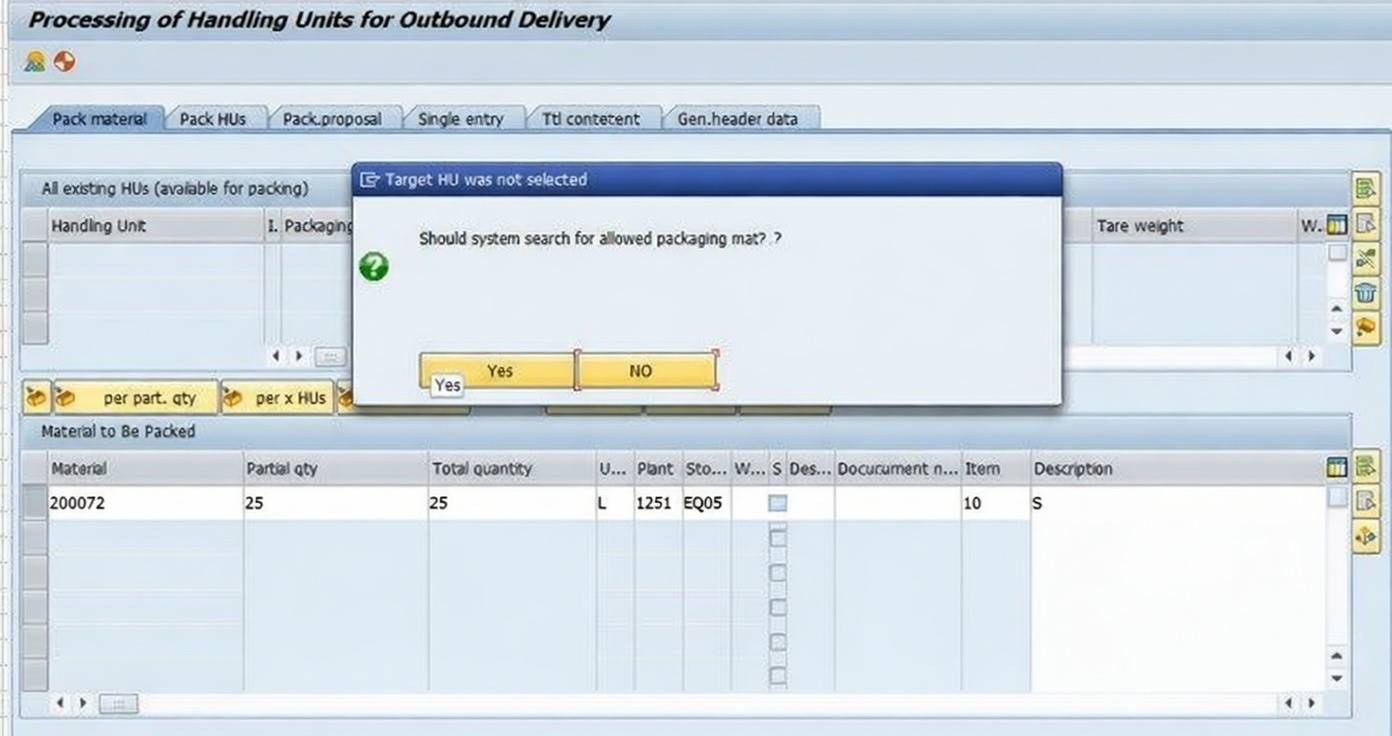
Then select the material number for packing – 200072 and complete the packing of the item.
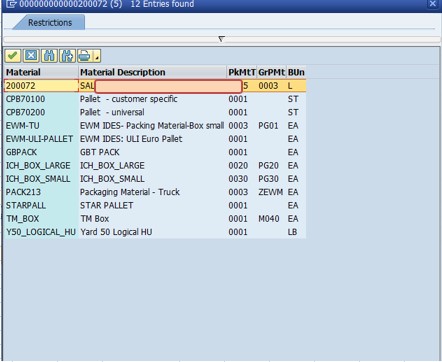
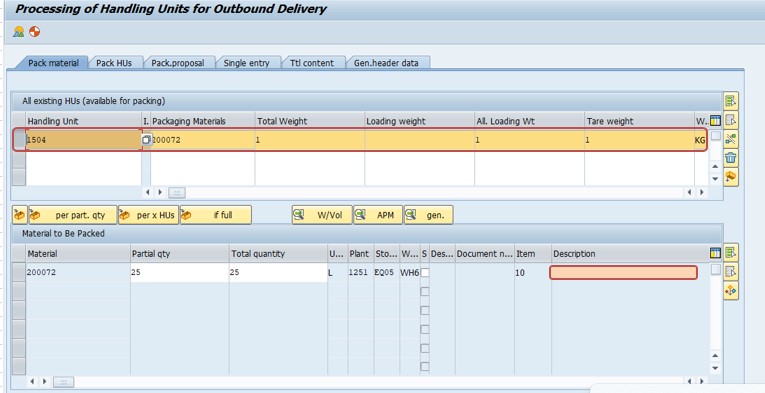
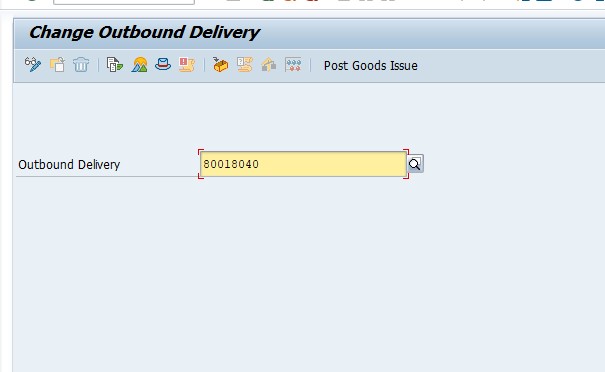
Then select PGI – Post Goods Issue. Post the goods issue so that the delivery is completed.
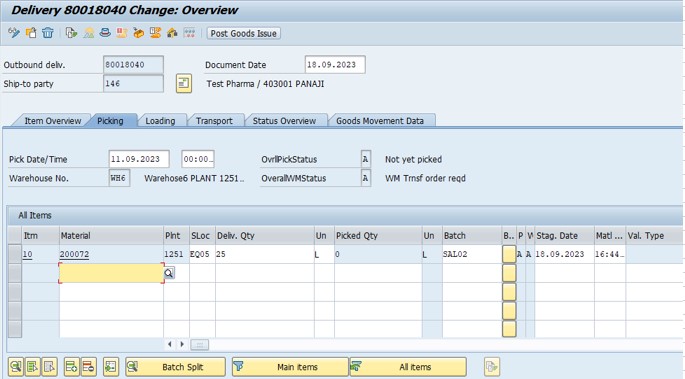
📋 Values Used in This Tutorial at a Glance
The table below summarizes every value from the steps above, so you can compare it with your own screen before you continue.
| Item | Value Used | Note |
|---|---|---|
| Transaction | VL01N | Create outbound delivery |
| Shipping point | DR01 | Use your own shipping point |
| Selection date | 11-09-2023 | As in the original screenshots |
| Order number | 20210 | Use your own sales order |
| Material for packing | 200072 | Packed in handling units |
| Final step | PGI | Post goods issue |
💡 Picking, Packing and PGI Compared
| Step | Purpose | Result in SAP |
|---|---|---|
| Picking | Take the goods from storage. | Picked quantity is recorded on the delivery item. |
| Packing | Put the goods into packing materials. | Handling units are created and linked to the delivery. |
| PGI | Confirm that the goods have left. | Stock reduces, accounting entries are made and the delivery status is updated. |
The order matters. Packing normally follows picking, and PGI is the last step, because it should reflect what was really picked and packed.
💰 What Happens When You Post Goods Issue
Post goods issue is the moment when the delivery becomes a real movement. In a standard setup, SAP reduces the stock of the material in the plant and storage location and creates a material document. It also creates an accounting document, which usually debits the cost of goods sold and credits inventory, based on the account determination of your company. The delivery status changes to completed for goods issue, and the sales order document flow shows the posted issue.
After PGI the delivery can be billed, which is why billing documents are created with reference to a posted delivery. Because the stock and the accounting both change, PGI should be performed only when the goods have really left. The exact accounting entries depend on your configuration, so confirm them with your finance team.
💼 Real-World Scenario: Shipping Order 20210 at Learn Pharma, Pune
At Learn Pharma in Pune, sales coordinator Pooja Patil confirmed order 20210 for material 200072. Warehouse lead Rohan Kulkarni asked her to prepare the delivery for shipping point DR01.
Pooja opened VL01N, entered the shipping point, the selection date and the order number, and created the outbound delivery. Rohan's team picked the items and confirmed the quantity. Pooja then used the Pack button, selected material 200072 and placed the items into a handling unit according to the packing instruction.
When the truck left the gate, she posted the goods issue. Stock reduced, the delivery showed as complete and finance lead Sameer Joshi could create the invoice. Pooja noted the steps and the order number in her work instruction so a new colleague could repeat the process.
📦 Understanding Handling Units
When you press the Pack button, SAP creates handling units. A handling unit is a physical unit, such as a carton or a pallet, together with the goods inside it. It has its own identification number, so the warehouse and the carrier can track exactly which items are in which box. The packing material, for example a box, is also recorded, which helps when you need to know how much packing material was used.
Packing instructions decide which packing material can hold which product and in what quantity. If the instruction says that a carton holds twelve pieces, SAP can propose how many cartons are needed for an order of fifty. The user can still adjust the packing when the real situation differs, but the instruction gives a reliable starting point and keeps packing consistent between shifts and people.
Handling units can also be nested. Cartons can be packed onto a pallet, and the pallet becomes the top-level unit that is shipped. Whether your company needs this depends on the product and the customer, so agree the packing design with the warehouse team before configuring it.
📝 Header and Item Data in the Outbound Delivery
The delivery document has header data and item data. Knowing where each piece of information lives makes it easier to find problems.
| Level | Examples | Why It Matters |
|---|---|---|
| Header | Shipping point, delivery date, ship-to party, route, weights. | Controls where and when the delivery is processed. |
| Item | Material, delivery quantity, plant, storage location, picked quantity. | Controls what is picked, packed and issued. |
| Packing | Handling units, packing materials, packed quantities. | Shows how the goods are organized for shipment. |
| Status | Picking status, packing status, goods issue status. | Shows how far the delivery has progressed. |
Before posting goods issue, check the status fields. They tell you in one glance whether picking and packing are complete, which makes them a quick quality check for the whole delivery.
🔄 Partial Deliveries and Shortages
Real warehouses do not always have the full quantity on hand. When stock is short, you can deliver part of the order now and the rest later, if the customer and the sales order allow partial deliveries. The delivery then contains only the quantity that was picked, and the open quantity stays in the sales order for a later delivery.
It is better to reduce the delivery quantity before posting goods issue than to post the full quantity and correct it afterwards. A wrong goods issue changes stock and accounting, and reversing it takes extra time. Make it a habit to compare the ordered, picked and packed quantities before the last step, and to tell the sales team when a shortage will delay the customer.
Over time, keep a simple record of which products are often short and why. If the same material is short every month, the cause is usually in planning or procurement and not in the delivery process, and the sales and supply teams can solve it together instead of working around it each time an order is shipped.
✅ Checklist Before You Post Goods Issue
| Check | Done When |
|---|---|
| Delivery data | Shipping point, ship-to party and delivery date are correct. |
| Picking | The picked quantity matches the delivery quantity. |
| Packing | All picked items are packed into handling units. |
| Stock | Enough stock exists in the plant and storage location. |
| Goods left | The goods have physically left or are leaving the warehouse. |
| Documents | Packing list and shipping papers are ready. |
Walking through this list takes only a few minutes, and it prevents most reversals of goods issue.
📋 After PGI: Document Flow and Billing
After the goods issue is posted, open the sales order with VA03 and look at the document flow. You should see the sales order, the outbound delivery and the material document linked together. The delivery is now ready for billing, and finance can create the invoice with VF01. If billing does not offer the delivery, check that the goods issue status is complete and that no billing block exists.
Keeping the document flow clean from order to invoice helps customer service answer questions quickly, because every step can be followed from one place. When a customer calls to ask where an order is, the agent can see in seconds whether it is picked, packed or already shipped, and give an honest answer without calling the warehouse.
❗ Common Mistakes in Picking, Packing and PGI
- Posting goods issue before the picking or packing is complete.
- Using the wrong shipping point, so the order is not found for delivery.
- Forgetting packing materials or instructions, so the Pack screen offers nothing to use.
- Picking a different quantity than the delivery shows and not correcting the delivery.
- Posting PGI for goods that have not left the warehouse.
- Not checking stock before creating the delivery.
🔧 Troubleshooting: When the Delivery Does Not Work
| Symptom | Likely Cause | What to Check |
|---|---|---|
| Order not found for delivery. | Wrong shipping point, date or order status. | Check the shipping point, the selection date and the order in VA03. |
| Cannot post goods issue. | Picking is not complete. | Check the picked quantity on each item. |
| Pack button offers nothing. | No packing material or instruction. | Check packing materials and packing instructions. |
| Stock error at PGI. | Not enough stock in the storage location. | Check stock and the storage location. |
| Delivery is blocked. | A delivery block is set on the order or customer. | Check blocks in the order and the customer master. |
✅ Best Practices for the Delivery Process
- Keep shipping points, plants and storage locations clearly assigned.
- Maintain packing instructions for products that are shipped often.
- Confirm picking before packing and packing before PGI.
- Check stock before creating deliveries for large orders.
- Use the delivery monitor to find open and delayed deliveries.
- Document the process and the responsible roles in a work instruction.
🔄 Reversing a Goods Issue
Sometimes goods are posted by mistake or return to the warehouse before the customer receives them. In a normal setup, a posted goods issue can be reversed with VL09. The system cancels the stock movement and the related accounting. A reversal is possible only if later documents allow it, so a delivery that has already been billed may need the billing document cancelled first. Always involve the finance team before reversing a goods issue in a live system.
📱 This Process in SAP S/4HANA
Outbound delivery, picking, packing and goods issue remain core functions in SAP S/4HANA, although screens, Fiori apps and some transactions can differ from the classic examples used here. Confirm the exact steps in your own release before you train users. The business principle does not change: the delivery is created, the goods are picked and packed, and the goods issue is posted.
🎓 Interview-Style Questions and Answers
Q: What is an outbound delivery?
It is the document in order-to-cash where goods are prepared for shipping to the customer.
Q: Which transactions are used?
VL01N to create, VL02N to modify and VL03N to display.
Q: What does PGI do?
It reduces stock, creates accounting entries and completes the delivery for goods issue.
Q: In what order do the steps run?
Delivery creation, picking, packing and then post goods issue.
Q: Which document follows PGI?
The billing document.
📚 Quick Glossary of Terms Used in This Guide
- Outbound Delivery: The document used to prepare goods for shipping.
- Shipping Point: The place where deliveries are processed, such as DR01 here.
- Picking: Taking goods from storage for a delivery.
- Packing: Placing picked goods into packing materials.
- Handling Unit: A packed unit, such as a box, recorded in the system.
- PGI: Post Goods Issue, the posting that confirms the goods have left.
🎯 Conclusion
Picking, packing and post goods issue turn a confirmed sales order into goods on their way to the customer. Open VL01N, select shipping point DR01, the selection date and order 20210, create the outbound delivery, pack material 200072 with the Pack button and post the goods issue. Then check the document flow and move on to billing. If you run into any errors while following along, feel free to send a screenshot to pramod@learntosap.com for help.