How to Create Profit Center in SAP Using T-Code KE51 [Step-by-Step]
A profit center is an organizational unit for which revenues and costs are tracked, so management can see the profit of a segment. This guide shows how to create one with transaction KE51, using controlling area 2004, profit center 920000, profit center group RAWM, company codes 1211 and 1212 and the original screenshots. It explains each field, the profit center group, the company code assignment, how revenues and costs reach the profit center, a real scenario, common mistakes, troubleshooting and best practices. If you encounter any errors in SAP, send a screenshot to pramod@learntosap.com and I will help you resolve the issue.
✅ How to Create Profit Center in SAP Using T-Code KE51
Create Profit Center: A Step-by-Step Guide
A company that sells many products in many regions soon needs to know where it actually makes money. The profit center is SAP's tool for this. It is an organizational unit for which revenues and costs are collected, so management can see the profit of a product line or a region. This guide shows how to create a profit center with transaction KE51 using the original screenshots, and then explains each field, the profit center group, the company code assignment and the checks that keep the master data clean.
In simple words, a profit center is a small business inside the business, with its own scoreboard of income and expenses.
📝 What Is a Profit Center in SAP?
Learn how to create a Profit Center in SAP using T-code KE51. Step-by-step guide with screenshots and SAP best practices. Ideal for SAP FICO learners. Profit Centers are vital organizational units within SAP FICO that allow businesses to analyze and manage their profitability on a more granular level. They can represent departments, product lines, regions, or any other segment of your organization where you want to track revenue, costs, and profits separately.
📋 Profit Center Compared with a Cost Center
| Point | Cost Center | Profit Center |
|---|---|---|
| Collects | Costs only. | Revenues and costs. |
| Answers | What does this area spend? | How profitable is this segment? |
| Typical unit | Department or project. | Product line, region or business unit. |
| Created with | KS01 | KE51 |
| Linked to | A profit center and a company code. | Cost centers, materials and company codes. |
The two objects work together. In the cost center guide, the cost center was linked to profit center 920000. This guide creates that profit center.
📝 Profit Center Transactions at a Glance
Go to Tcode KE51
| Transaction | Purpose |
|---|---|
| KE51 | Create a profit center (used in this guide). |
| KE52 | Change a profit center. |
| KE53 | Display a profit center. |
| KCH1 | Create a profit center group. |
| KS01 | Create a cost center that links to the profit center. |
| OKKP | Maintain the controlling area. |
🔧 What You Need Before You Create a Profit Center
- A controlling area, here 2004, with profit center accounting active.
- Company codes, here 1211 and 1212, assigned to the controlling area.
- A profit center group, here RAWM, to place the profit center in.
- A person responsible, here the production manager.
- A naming and numbering rule agreed with the controlling team.
- Authorization to create profit center master records.
If a company code is not assigned to the controlling area, SAP will refuse it in the assignment step. The plant 1251 error page explains how to fix that assignment.
🔧 Step-by-Step: Create a Profit Center with KE51
Steps to Create Profit Center in SAP (KE51)
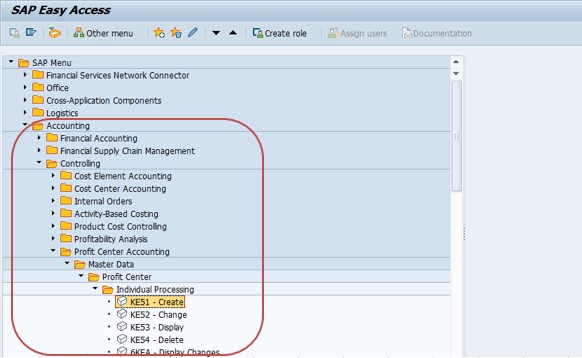
Go to Tcode KE51. Follow the path: ACCOUNTING → FINANCIAL ACCOUNTING → CONTROLLING → PROFIT CENTER ACCOUNTING → MASTER DATA → PROFIT CENTER → KE51.
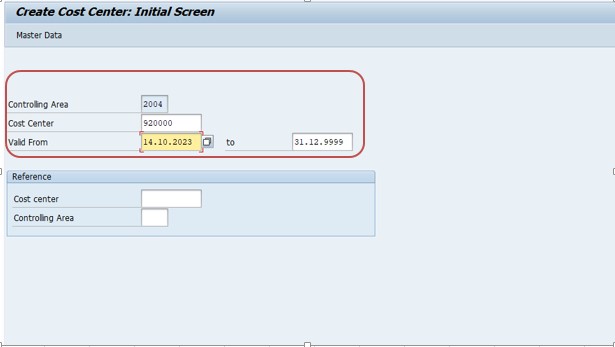
Select the controlling area. Controlling Area: 2004.
Select the profit center. Profit Center: 920000 (this is the profit center linked to the cost center in the previous guide).
Select the validity. Valid From: 14.10.2023 To: 31.12.9999.
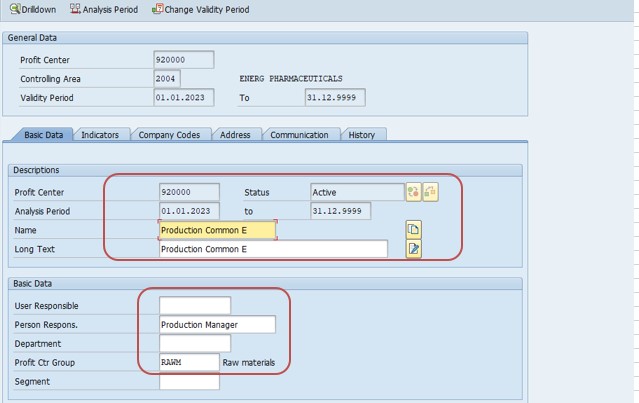
Select the name. Name: Production Common E.
Select the person responsible. Person Respons.: Production Manager.
Select the profit center group. Profit Ctr Group: RAWM.
Select the assignment. Assign Company Code: 1211, 1212.
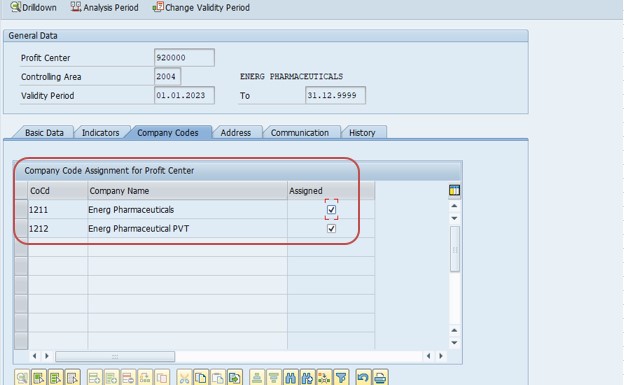
Save. SAP shows a message that the profit center was created.
📋 Values Used in This Tutorial at a Glance
The table below summarizes every value from the steps above, so you can compare it with your own screen before you save.
| Field | Value Used | Note |
|---|---|---|
| Transaction | KE51 | Create profit center |
| Controlling area | 2004 | Use your own controlling area |
| Profit center | 920000 | Follow your numbering rule |
| Valid from / to | 14.10.2023 to 31.12.9999 | No planned end date |
| Name | Production Common E | Name of the profit center |
| Person responsible | Production Manager | Owner of the profit center |
| Profit center group | RAWM | Group for reporting |
| Company codes | 1211, 1212 | Assigned in the assignment step |
| Final action | Save | Creates the profit center |
💡 The Fields of the Profit Center Explained
| Field | Meaning | Why It Matters |
|---|---|---|
| Controlling area | The organizational unit in which the profit center exists. | All profit centers belong to one controlling area. |
| Profit center | The number that identifies the profit center. | Used in master data, postings and reports. |
| Valid from / to | The period in which the profit center can be used. | Prevents postings outside the period. |
| Name | A short and a long description. | Helps users find the right profit center. |
| Person responsible | The manager of the profit center. | Receives reports and answers questions. |
| Profit center group | The node in the profit center hierarchy. | Groups profit centers for reporting. |
| Company codes | The legal entities whose data may use the profit center. | Decides which ledgers can post to it. |
Field names and layout differ slightly between releases, so compare with your own screen before you save.
🏢 The Profit Center Group RAWM
A profit center group is a set of profit centers combined for reporting. In this guide the group is RAWM, which the controlling team created earlier, for example with KCH1. Managers can report on the whole group, such as all profit centers in raw material production, and still drill down to a single profit center when needed.
The group structure should follow the way management looks at the business. If the company reports by product line, the groups should be product lines. If it reports by region, the groups should be regions. A profit center placed in the wrong group appears in the wrong report, so ask the controlling team to confirm the group before you save.
📦 Assigning Company Codes 1211 and 1212
This guide assigns two company codes, 1211 and 1212, to the profit center. The assignment tells SAP that postings from these company codes may use the profit center. If a company code is not assigned, a posting that refers to the profit center will be rejected or will go to a different profit center.
Think about which legal entities really share the segment. In many groups, one production profit center serves several company codes, which is why two are assigned here. Agree the assignment with the controller, because changing it later can affect reports and balances.
💰 How Revenues and Costs Reach the Profit Center
A profit center does not collect data by itself. Costs arrive when a cost center linked to the profit center receives postings, such as the cost center created with KS01. Revenues and other costs arrive from sales and logistics documents, because materials, plants and orders carry a profit center in their master data.
| Source | How It Reaches the Profit Center |
|---|---|
| Cost center postings | The cost center is linked to the profit center. |
| Sales orders and billing | The material or plant carries the profit center. |
| Manual journal entries | The user enters the profit center in the line item. |
| Internal orders | The order is linked to a profit center. |
When profit center reports look wrong, check these four links first. Most differences come from a missing or wrong link in the master data.
💼 Real-World Scenario: Creating a Profit Center at Learn Pharma, Pune
At Learn Pharma in Pune, management wanted to know how profitable the common production area was. Controller Sameer Joshi had already linked cost center 900000 to profit center 920000, but the profit center did not exist yet. He asked functional consultant Neha Deshmukh to create it.
Neha opened KE51, entered controlling area 2004, profit center 920000 and the validity from 14.10.2023 to 31.12.9999. She entered the name Production Common E, the person responsible, the profit center group RAWM, assigned company codes 1211 and 1212, and saved.
Accounts payable executive Pooja Patil posted the next expense to the cost center, and the cost appeared in the profit center report. Production manager Rohan Kulkarni could now see the profit of his area. Neha added the profit center to the master data list, so audits could see who created it and why.
📝 Designing the Profit Center Structure
The structure of profit centers should mirror how management looks at the business. Some companies create one profit center per product line, others one per region, and others one per legal entity. The right choice depends on the questions management asks, and it is easier to design it correctly before the first posting than to change it later.
| Design Choice | Advantage | Risk |
|---|---|---|
| By product line | Shows which products earn money. | Shared costs are hard to split. |
| By region | Shows which markets perform. | Product detail is less visible. |
| By legal entity | Easy to reconcile with company codes. | May hide differences inside the entity. |
Whatever the choice, keep the number of profit centers manageable. Too many make reports confusing, and too few hide important differences. Review the structure once a year with the controller.
📊 Reporting by Profit Center
The main purpose of a profit center is reporting. Managers compare revenues and costs of each profit center, calculate margins and discuss differences with their teams. Some companies go further and report balance sheet items by profit center, such as receivables and inventory, to see how much capital each segment ties up.
These reports are only as good as the master data behind them. If materials, cost centers and orders point to the wrong profit center, the profit shown is wrong. Agree an owner for the links, and review the reports every month. Whenever a number looks surprising, trace it back to the line items and check the profit center on each one.
🔄 What Happens When No Profit Center Is Found
Not every posting has a profit center. If a document has no profit center and none can be derived from the master data, SAP may post it to a default or dummy profit center, depending on your configuration. This keeps the books balanced, but it hides who earned or spent the money, because the amount lands in a shared bucket.
A monthly check of the default profit center helps. If large amounts accumulate there, find the source, such as a cost center without a link or a material without a profit center, and correct the master data. Over time the default profit center should stay close to empty, which shows that the structure is complete.
📅 Month-End Checks for Profit Centers
| Check | Done When |
|---|---|
| Master data | New profit centers are approved and in the right group. |
| Links | Cost centers, materials and orders point to valid profit centers. |
| Default profit center | No large unexplained amounts remain. |
| Reports | Profit center totals agree with the ledger. |
| Documentation | Changes and reasons are filed. |
A short checklist at month end finds small problems before they turn into audit findings and keeps the segment reports reliable.
❗ Common Mistakes When Creating a Profit Center
- Creating a cost center that points to a profit center that does not exist.
- Placing the profit center in the wrong profit center group.
- Forgetting to assign all company codes that should use it.
- Using a vague name that nobody understands later.
- Choosing a valid-to date that ends too early, so postings fail.
- Creating duplicate profit centers for the same segment.
🔧 Troubleshooting: When the Profit Center Does Not Work
| Symptom | Likely Cause | What to Check |
|---|---|---|
| Company code not accepted. | It is not assigned to the controlling area. | Check the assignment with OX19. |
| Profit center group not found. | The group does not exist. | Create the group with KCH1. |
| Profit center already exists. | The number is already in use. | Choose another number or check with KE53. |
| Posting goes to another profit center. | The link in the master data is wrong. | Check the cost center, material or order. |
| Cannot save. | Missing authorization or a required field. | Read the message and check the required fields. |
✅ Best Practices for Profit Center Master Data
- Use a documented numbering scheme and follow it for every new profit center.
- Give each profit center a clear name and a named responsible person.
- Place every profit center in the profit center group at creation time.
- Link cost centers, materials and orders to the right profit center.
- Review the list of profit centers every year and block those no longer used.
- Limit who can create and change profit centers, and review changes regularly.
📊 Who Maintains Profit Center Master Data
| Role | Responsibility |
|---|---|
| Controller | Approves new profit centers and the group structure. |
| Functional consultant | Creates profit centers and checks the configuration. |
| Business unit head | Confirms the purpose and the person responsible. |
| Auditor | Reviews changes and approvals. |
| Key user | Tests postings and reports problems. |
Writing down these responsibilities avoids the situation where everyone assumes someone else owns the profit center list, and nobody does.
📅 A Simple Routine for New Profit Centers
| Step | Action | Owner |
|---|---|---|
| 1 | Request the profit center with purpose and manager. | Business unit head |
| 2 | Check for an existing profit center with the same purpose. | Controlling team |
| 3 | Create the profit center with KE51. | Functional consultant |
| 4 | Link cost centers, materials and orders. | Master data team |
| 5 | Test a posting and the profit center report. | Key user |
| 6 | Approve and update the profit center list. | Controller |
Following the same six steps for every new profit center keeps the structure consistent and easy to audit.
📱 Profit Centers in SAP S/4HANA
Profit center accounting is part of the universal journal in SAP S/4HANA, and many companies maintain profit centers with the Fiori app Manage Profit Centers, while KE51 may still be available in your release. Fields and screens can differ from the classic examples used here. Confirm the exact steps in your own release before you train users. The business principle does not change: each profit center has a number, a validity, a group and company code assignments.
🎓 Interview-Style Questions and Answers
Q: What is a profit center?
An organizational unit for which revenues and costs are tracked so its profit can be reported.
Q: Which transaction creates it?
KE51.
Q: What is a profit center group?
A set of profit centers combined for reporting.
Q: How do costs reach a profit center?
Through cost centers, materials, plants and orders that are linked to it.
Q: What must exist before creating a profit center?
A controlling area, and company codes assigned to it.
📚 Quick Glossary of Terms Used in This Guide
- Profit Center: An organizational unit for which profit is reported.
- Cost Center: An organizational unit that incurs costs.
- Controlling Area: The highest organizational unit in SAP Controlling.
- Profit Center Group: A set of profit centers combined for reporting.
- Company Code: The smallest unit for which a complete set of accounts can be drawn up.
- Validity Period: The dates between which the profit center can be used.
🎯 Conclusion
Creating a profit center with KE51 gives management a clear view of how profitable a segment is. Open the transaction, enter controlling area 2004, profit center 920000 and the validity dates, add the name Production Common E, the person responsible, the profit center group RAWM, assign company codes 1211 and 1212, and save. Then test a posting and keep the profit center list up to date. If you encounter any errors in SAP, send a screenshot to pramod@learntosap.com and I will help you resolve the issue.