SAP CO Error: "Control Indicators for Controlling Area 1213 Do Not Exist" – Causes and Step-by-Step Fix
A user tries an action in Controlling and SAP stops because the control indicators of the controlling area are missing. The fix is to maintain them in OKKP. This guide explains the message, what control indicators are, the exact OKKP steps with the original screenshots, how to verify the result and how to avoid the error in future. If you run into any errors while following along, feel free to send a screenshot to pramod@learntosap.com for help.
❌ The Error Message at a Glance
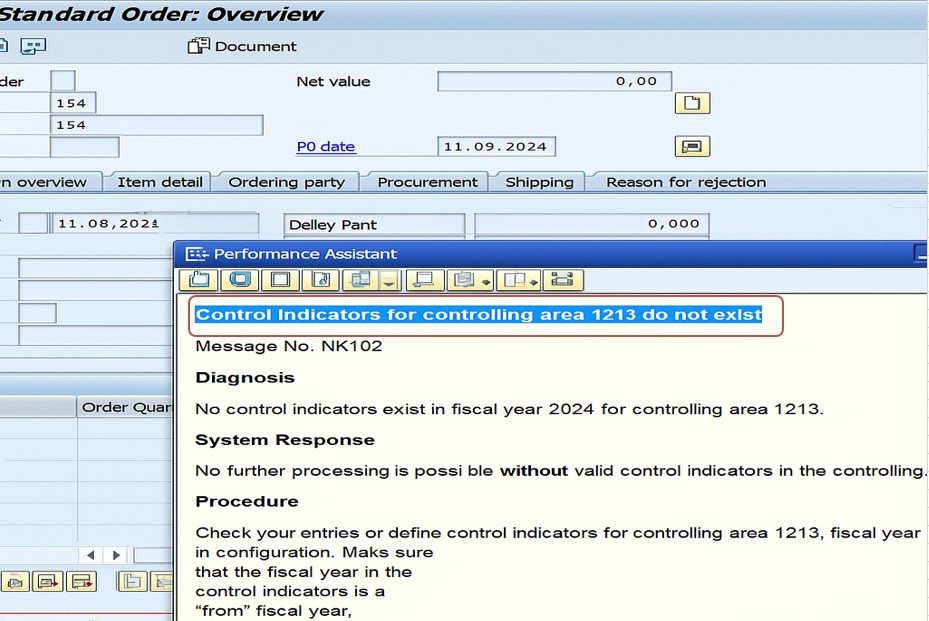
| Item | Value in This Example |
|---|---|
| Message text | Control indicators for controlling area 1213 do not exist |
| Controlling area | 1213 |
| Module | SAP CO (Controlling) |
| Where to fix it | OKKP, Basic Data tab |
| Cost Center Accounting | Component not active (depends on your needs) |
| Internal Orders | Component active (if used) |
| Fiscal year variant | 2024 to 9999 |
The controlling area in your own message may differ from this example. The same steps apply with your own values.
📑 What You Will Learn in This Guide
- What the message means
- Possible reasons
- What control indicators are
- Where you meet the error
- Diagnose the problem
- Solution: maintain the controlling area in OKKP
- Fields set in this guide
- Notes before you save
- Verify the fix
- Real-world scenario
- Common mistakes
- Troubleshooting
- Prevent the error
- Frequently asked questions
✅ What Does "Control Indicators for Controlling Area 1213 Do Not Exist" Mean?
This message appears when you try to perform an action in the Controlling (CO) module, but SAP cannot find the basic configuration (control indicators) for controlling area 1213. The control indicators define the core settings for the CO area, such as whether cost center accounting or internal orders are active.
A controlling area is the highest organizational unit in SAP Controlling. Creating it is only the first step. Before anything can be posted or planned, the area needs settings that tell the system what it should do: which components to use, which currency to work in and which fiscal year variant to follow. These settings are stored as control indicators. If they are missing, SAP has no instructions for the area and stops.
The message is therefore not a data entry mistake. It is a gap in configuration, and it is solved once, in the controlling area maintenance screen.
💡 Possible Errors and Causes
The message points to one of the following situations:
- The controlling area 1213 exists in the system but lacks basic configuration.
- The system cannot proceed with cost accounting, budgeting, or order tracking unless control indicators are set.
| Cause | What Is Wrong |
|---|---|
| New controlling area | The area was created but its control indicators were never maintained. |
| Incomplete setup | Some tabs were filled but the Basic Data settings were skipped. |
| Wrong controlling area | The action runs in area 1213 while the configuration was done for another area. |
| Transport missing | The setting exists in development but has not reached this client. |
| Copied area | The area was copied without the settings being completed. |
In daily work the first cause is the most common. A new controlling area is created during a project, and the first user to try a CO action meets the message.
📝 What Are Control Indicators in a Controlling Area?
Control indicators are the switches and defaults of a controlling area. The table below lists the ones used in this guide and what each one means.
| Setting | Meaning | Why It Matters |
|---|---|---|
| Cost Center Accounting | Whether the cost center component is active. | Decides if cost centers can be used in the area. |
| Internal Orders | Whether the internal order component is active. | Decides if orders can be created and tracked. |
| Currency | The currency of the controlling area. | All controlling values are held in this currency. |
| Fiscal Year Variant | The calendar of periods used by the area. | Decides which periods are open for posting and planning. |
Exact fields and screen layout can differ between releases, so always compare with your own OKKP screen.
📋 Where You Meet This Error in Daily Work
The message does not belong to one transaction. It can appear whenever the system needs the controlling area settings:
- Creating a cost center or an internal order for the first time.
- Posting an expense that must be assigned to controlling objects.
- Starting planning or budgeting in the controlling area.
- Running a period-end step in Controlling.
- Testing a new organizational setup during a project.
Because many CO actions read the same settings, the message can show up in several places until the configuration is fixed.
🔧 Step-by-Step: Diagnose the Problem
Read the message. Note the controlling area, here 1213.
Open OKKP and enter controlling area 1213. Check whether the area exists and which settings are filled.
Look at the Basic Data tab. See whether components, currency and fiscal year variant are maintained.
Confirm the controlling area in the action. Make sure the company code or object belongs to area 1213.
Plan the settings. Agree with the finance team which components the area should use before you configure anything.
✅ Solution: OKKP (Enter Controlling Area = 1213)
Follow Steps
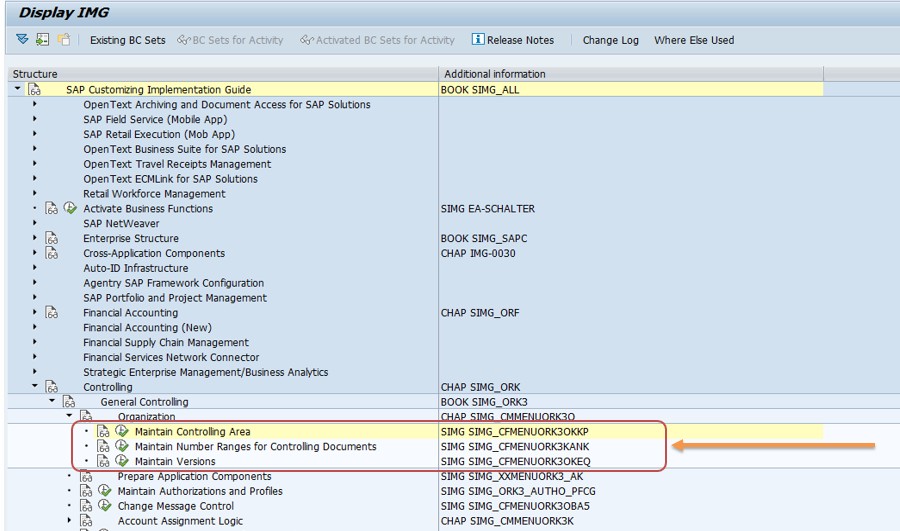
Go to Tcode OKKP and enter Controlling Area = 1213.
Menu path: SPRO → Controlling → General Controlling → Organization → Maintain Controlling Area → Control Indicators (T-code: OKKP).
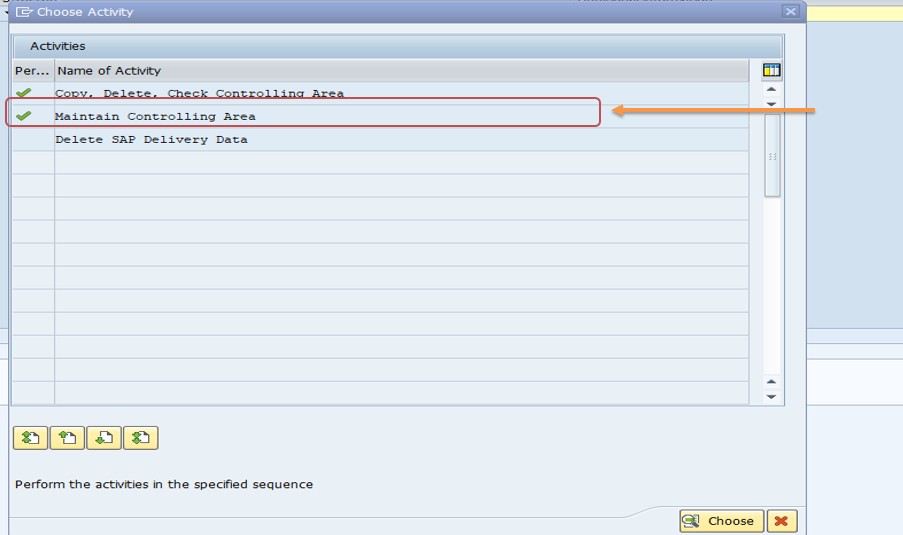
Go to the Basic Data tab.
Then set the following fields:
- Activate Cost Center Accounting – Component Not Active (depend on your needs)
- Activate Internal Orders (if used) – Component Active
- Currency settings (e.g., controlling area currency)
- Fiscal Year Variant – 2024 to 9999
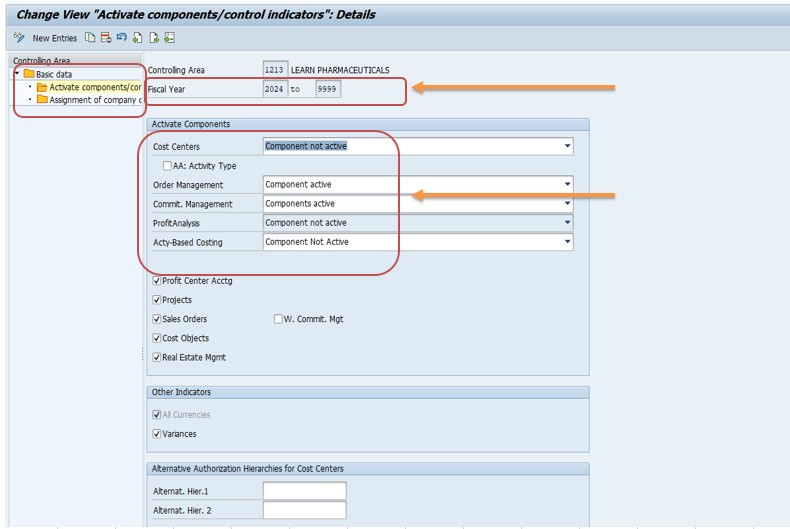
Save. Assign a customizing request if the system asks for one.
📋 Fields Set in This Guide at a Glance
The table below summarizes every value from the steps above, so you can compare it with your own screen before saving.
| Field | Value Used | Note |
|---|---|---|
| Controlling area | 1213 | Replace with your own area |
| Activate Cost Center Accounting | Component not active | Depends on your needs |
| Activate Internal Orders | Component active | If used |
| Currency | Controlling area currency | Agree with finance |
| Fiscal Year Variant | 2024 to 9999 | As in this example |
Keeping a small table like this in your configuration workbook makes later audits much easier, because anyone can see which values were entered and why.
💡 Cost Center Accounting and Internal Orders: Which One Do You Need?
The two components set in this guide serve different purposes. Cost center accounting records costs by the place where they arise, for example a department. Internal orders collect costs for a specific task, such as a repair, a campaign or a short project. Many companies use both, but some need only one, and that is why the guide notes that cost center accounting depends on your needs.
Before switching a component on or off, ask the controller three questions. Which costs must be reported by department? Which tasks need their own cost collection? And who will maintain the master data for each component? A component that nobody maintains becomes clutter, and a missing component forces workarounds later. Record the decision and the reason in the project documentation so the setting can be explained during audits.
Be careful with changes in a live system. Switching a component off after data has been posted can block reports or cause new messages, so check existing documents and involve the finance team before you change anything in production.
📅 Currency and Fiscal Year Variant: Why They Matter
The controlling area currency is the currency in which all controlling values are held. Values posted in other currencies are converted into it, so the choice affects every report. Most companies use the currency of their main company code, but groups with several company codes may choose a different one. Agree this with finance, because changing it later is a major project.
The fiscal year variant defines the calendar of posting periods. In this example the variant runs from 2024 to 9999, which simply means the setting is valid from the year 2024 without an end date. The variant must match the one used by the company codes assigned to the controlling area, otherwise periods will not line up and postings or planning can fail.
When you save the control indicators, compare the currency and the variant with the company code settings one more time. A mismatch found now costs a few minutes. The same mismatch found after go-live can mean corrections in many documents, so treat this final comparison as a required step and not an optional extra.
📝 Notes Before You Save
- Agree the active components with the finance and controlling teams before configuring.
- Choose the controlling area currency carefully, because it affects every value in the area.
- Check that the fiscal year variant matches the one used by the company codes.
- Do not switch components off in a live area without checking existing data.
- Save on a customizing request and move it through Development, Quality and Production.
- Take a screenshot of the final OKKP screen for your documentation.
✅ Verify the Fix
After saving, repeat the action that caused the message, for example creating a cost center or an internal order. The error about control indicators should be gone. Reopen OKKP for area 1213 and compare the Basic Data tab with the table above. If a new message appears, for example about a missing assignment of a company code, the first problem is solved and the next setting needs attention.
💼 Real-World Scenario: Completing Controlling Area 1213 at Learn Pharma, Pune
At Learn Pharma in Pune, controller Sameer Joshi tried to create an internal order for the first time in the new controlling area 1213. SAP stopped him with the message that control indicators for the controlling area do not exist. He asked functional consultant Neha Deshmukh for help.
Neha opened OKKP, entered controlling area 1213 and found that the Basic Data tab was almost empty. Together with Sameer she decided that internal orders should be active, set the currency and the fiscal year variant, and saved the change on a customizing request.
After testing in the quality system, the transport moved to production. Sameer created his internal order without the error, and Neha recorded the settings in the configuration workbook so the next controlling area would be set up in the same way.
❗ Common Mistakes When Fixing This Error
- Opening OKKP for the wrong controlling area, so the settings for 1213 stay empty.
- Switching on components that the business does not use.
- Setting a currency or fiscal year variant that does not match the company codes.
- Forgetting to save, or saving without a customizing request.
- Fixing the setting in development and never moving it to quality or production.
- Testing only one action and not the other CO processes.
🔧 Troubleshooting: When the Message Still Appears
| Symptom | Likely Cause | What to Check |
|---|---|---|
| Same message after saving. | The transport has not reached this client. | Check the request status and import it. |
| Message mentions another area. | A different controlling area is used by the object. | Check the controlling area of the company code. |
| Settings cannot be changed. | Missing authorization or a locked request. | Ask for the right role or an open request. |
| A different message appears. | The next setting is missing. | Read the new message and fix it in the same way. |
| Values differ between clients. | The settings were entered by hand in each client. | Compare the OKKP entries and align them by transport. |
✅ Best Practices for Controlling Area Setup
- Complete the control indicators right after creating the controlling area.
- Agree the active components, currency and fiscal year variant with finance first.
- Keep the settings the same in every client unless there is a documented reason.
- Test a cost center and an internal order in the quality system before release.
- Record the settings and the transport number in your configuration workbook.
- Review the controlling area setup when the organization changes.
🛡 How to Prevent This Error in Future
- Add control indicators to the checklist for every new controlling area.
- Run a test creation of a cost center as part of the setup.
- Restrict who may change controlling area settings in production.
- Document the standard settings for new areas.
- Review controlling areas once a year for incomplete setups.
📱 This Message in SAP S/4HANA
The controlling area remains a core organizational unit in SAP S/4HANA, although menu paths, Fiori apps and some settings can differ from the classic examples used here. Confirm the exact path and fields in your own release before you plan the work. The principle does not change: the controlling area needs its control indicators before any Controlling process can run.
🔄 What to Do After the Fix
Once the message is gone, finish the job. Assign company codes to the controlling area if that has not been done, create the first cost centers and orders, and test a posting with the finance team. Update your configuration documentation with the final settings and the transport number.
If your company later adds another controlling area, repeat the same pattern: create the area, maintain the control indicators, test a basic action and record the result. Treating the setup as a standard checklist item keeps this message from returning, and it gives every new project a clear, repeatable starting point.
Finally, share the finished settings with the controlling team. When everyone knows which components are active and which currency and fiscal year variant are used, questions at month end are answered in minutes, and new colleagues can learn the setup from one simple table.
It is also wise to keep a dated screenshot of the OKKP screen after every change, with a note of who approved it. Months later, when someone asks why a component is active or which currency was chosen, the answer is one click away and nobody has to reconstruct the decision from memory.
✅ Checklist Before Moving the Fix to Production
| Check | Done When |
|---|---|
| Controlling area | Area 1213 exists and is selected in OKKP. |
| Components | Cost center accounting and internal orders are set as agreed. |
| Currency | The controlling area currency is maintained. |
| Fiscal year variant | The variant is maintained and matches the company codes. |
| Test action | A cost center or order was created without the error. |
| Transport | The request is released and imported in the right order. |
Walking through this list takes only a few minutes, and it often catches a second missing setting that would have caused another message after go-live.
🎓 Interview-Style Questions and Answers
Q: What are control indicators?
They are the core settings of a controlling area, such as which components are active, the currency and the fiscal year variant.
Q: Which transaction fixes this error?
OKKP, on the Basic Data tab of the controlling area.
Q: What happens if control indicators are missing?
The system cannot proceed with cost accounting, budgeting or order tracking.
Q: Is a transport needed?
Yes. The setting is customizing and moves through the landscape.
Q: How do you test the fix?
Repeat the failed action, such as creating a cost center or an internal order.
📚 Quick Glossary of Terms Used in This Guide
- Controlling Area: The highest organizational unit in SAP Controlling.
- Control Indicators: The core settings of a controlling area.
- Cost Center Accounting: The component that records costs by cost center.
- Internal Order: An object used to collect and track costs for a specific task.
- Fiscal Year Variant: The calendar of posting periods.
- Customizing Request: The transport that carries configuration changes between systems.
🎯 Conclusion
The error "Control indicators for controlling area 1213 do not exist" has a simple cause: the controlling area has no basic configuration. Open OKKP, enter controlling area 1213, go to the Basic Data tab, set the components, the currency and the fiscal year variant, and save. Then test a basic action and record the setting. If you run into any errors while following along, feel free to send a screenshot to pramod@learntosap.com for help.