SAP FI Error: "Error in Account Determination: Table T030R Key LNER JII" – Causes and Step-by-Step Fix
A user posts an invoice with tax and SAP stops because it cannot find a G/L account for the tax key. The fix is to create the IGST accounts and assign them in OB40. This guide explains the message, the key fields, the exact OB40 and FS00 steps with the original screenshots, the tax code mapping, how to verify the result and how to avoid the error in future. If you run into any errors while following along, feel free to send a screenshot to pramod@learntosap.com for help.
❌ The Error Message at a Glance
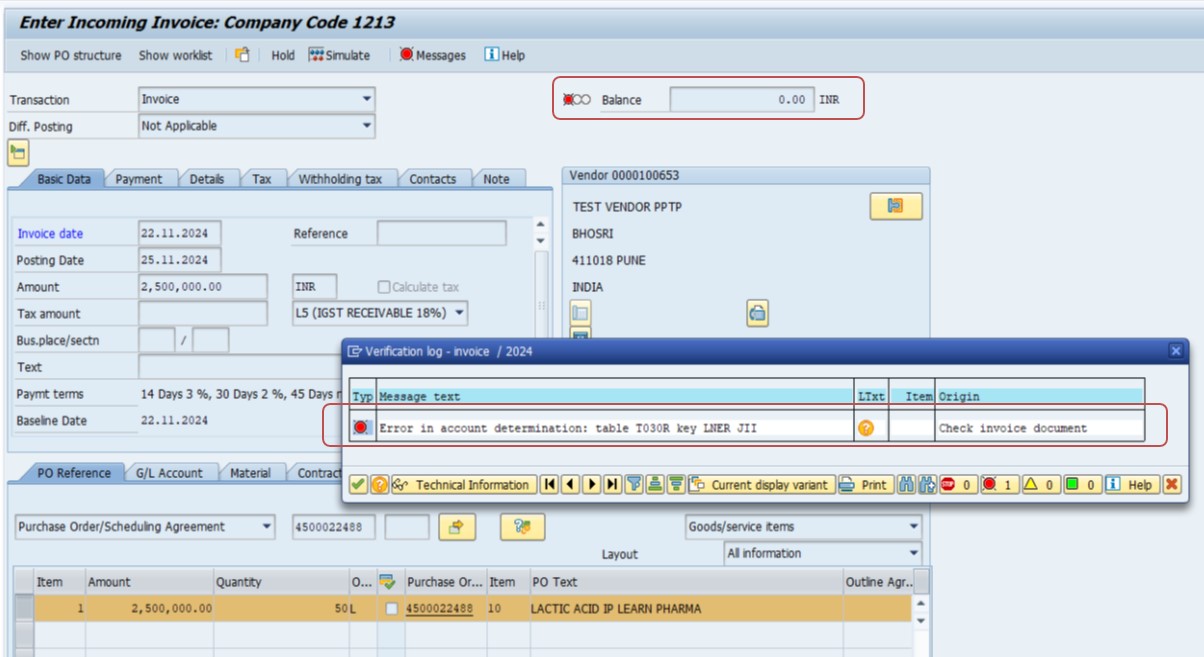
| Item | Value in This Example |
|---|---|
| Message text | Error in account determination: table T030R key LNER JII |
| Table | T030R |
| Transaction key | LNER |
| Account determination key | JII (Integrated GST) |
| Modules | SAP FI and MM integration (tax postings) |
| Where to fix it | OB40 and FS00 |
The key in your own message may differ from this example. The same method applies with your own values.
📑 What You Will Learn in This Guide
✅ What Does "Error in Account Determination: Table T030R Key LNER JII" Mean?
The common error message "Error in account determination: table T030R key LNER JII" typically indicates an issue with account determination settings in SAP, specifically for transaction type LNER and key JII. This often occurs in financial postings, such as invoice verification or goods receipt, where the system is unable to find the correct G/L account.
In simple words, SAP posts many amounts automatically. When a vendor invoice contains tax, the system does not ask the user which account the tax goes to. It reads the configuration and finds the account on its own. If the configuration has no entry for the key that the posting needs, SAP cannot continue and shows this message. The posting is stopped because the amount would otherwise have no place in the ledger.
The message is therefore not a data entry mistake. It is a gap in configuration, and it is solved once, in the account determination settings, by assigning a G/L account to the key.
📝 Understand the Configuration Key Fields
Before changing anything, it helps to read the three parts of the message. Each one tells you where to look.
| Field | Meaning | What It Tells You |
|---|---|---|
| T030R | This table stores the account determination settings for specific business processes like tax or posting keys. | The configuration that is missing is stored here. |
| LNER | Refers to the transaction type for which account determination is configured. | The business process that needs the account. |
| JII | Represents the account determination key used to find the relevant G/L account. | In this example it is Integrated GST, so IGST accounts are needed. |
Together, the message says: for transaction LNER and key JII, no G/L account could be found in the account determination settings. Exact table behaviour can differ between releases, so confirm what you see in your own system.
💡 Why Does This Error Appear? Common Causes
| Cause | What Is Wrong |
|---|---|
| No G/L account for key JII | Key JII was selected, but no account is assigned for the tax code. |
| G/L account not created | The IGST account does not exist yet in FS00, so there is nothing to assign. |
| Tax code not mapped | A tax code such as L3 exists but has no account in the OB40 table. |
| New tax rate added | A new rate was introduced, but its account was not added to the configuration. |
| Wrong chart of accounts | The account was created in another chart of accounts than the one used by the company code. |
| Transport missing | The setting exists in development but has not reached this client. |
In daily work the first and third causes are the most common. A new tax code is created, a user posts with it on the same day, and the first posting stops with this message.
📋 Where You Meet This Error in Daily Work
The message can appear in any posting that creates a tax line:
- Vendor invoices with tax in MIRO or FB60.
- Goods receipts and invoice receipts in purchase order processes that carry tax.
- Manual journal entries in FB50 where a tax code is entered.
- Posting of expenses with input tax from the purchasing process.
- Tests during a GST or tax configuration project.
Because MM postings use automatic determination, the user may never have typed the account. That is why the message sometimes surprises people: the account comes from configuration, not from the screen.
🔧 Step-by-Step: Diagnose the Problem
Read the message. Note the table T030R, the transaction LNER and the key JII.
Open OB40 and select key JII. Check whether G/L accounts are assigned or not.
Check the accounts in FS00. Confirm that the IGST accounts exist in the chart of accounts of the company code.
List the tax codes in use. Find which tax codes the posting used, for example L1 to L5.
Plan the mapping. Write down which tax code should post to which account before you configure anything.
✅ Solution: OB40 (Configure Automatic Posting)
SOLUTION – OB40 (Configure Automatic Posting).
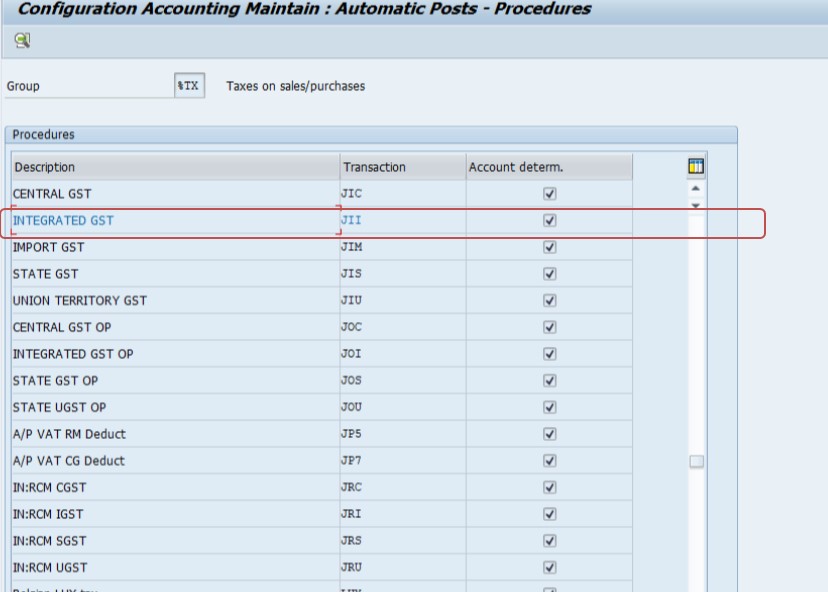
1) JII – Integrated GST
Follow Steps
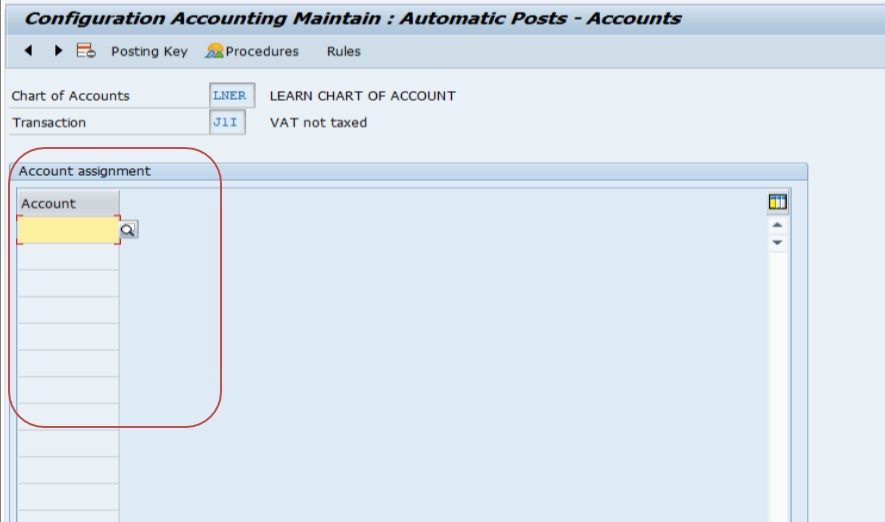
Go to Tcode OB40. Select JII and check whether the G/L code is assigned or not.
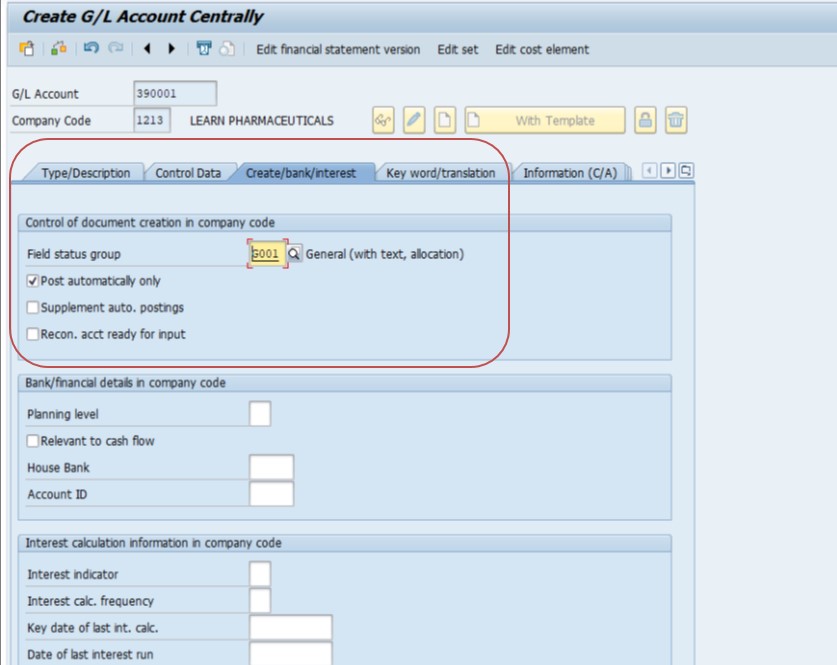
Create the G/L codes in FS00. Create the following accounts:
- G/L code 39005 – example IGST Receivable Nil
- G/L code 39001 – example IGST Receivable 5%
- G/L code 39002 – example IGST Receivable 12%
- G/L code 39003 – example IGST Receivable 18%
- G/L code 39004 – example IGST Receivable 28%
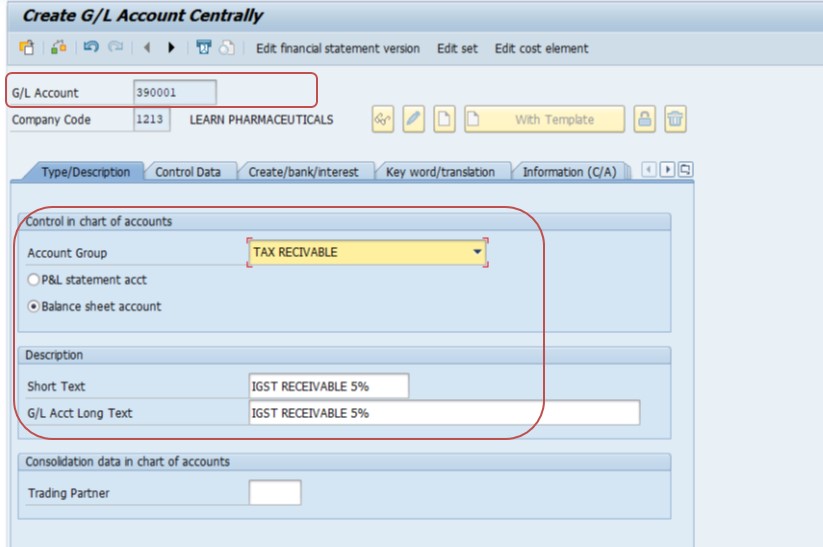
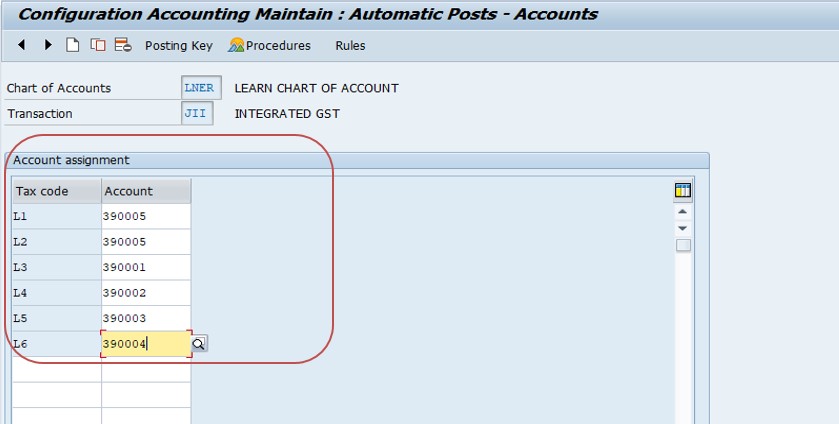
Then assign the G/L codes in OB40 (Configure Automatic Posting) for JII – Integrated GST. Assign the tax code with the G/L code, as in the next section.
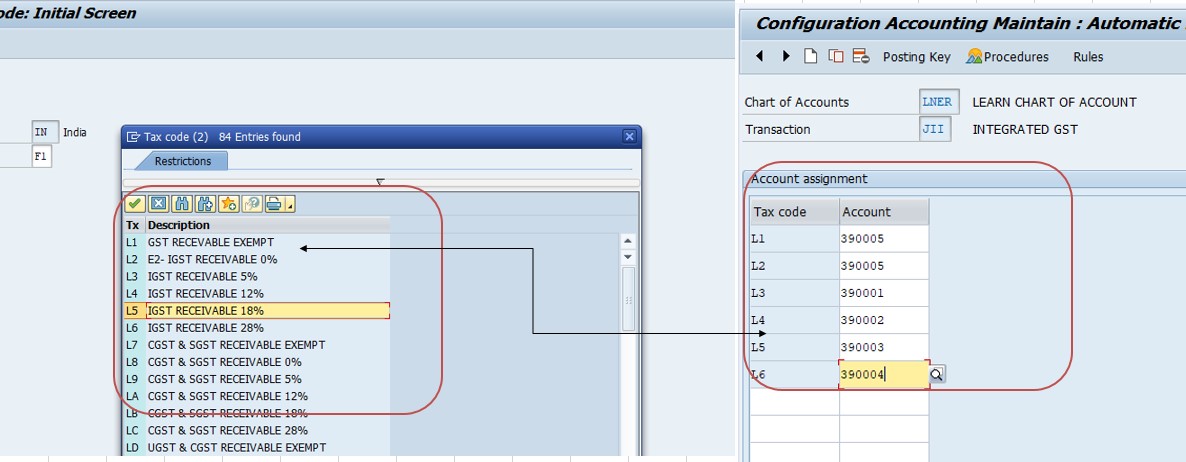
Save. Assign a customizing request if the system asks for one.
📋 Tax Code and G/L Account Mapping Used in This Guide
The table below summarizes every assignment from the steps above, so you can compare it with your own screen before saving.
| Tax Code | G/L Code | Example Description |
|---|---|---|
| L1 | 39005 | IGST Receivable Nil |
| L2 | 39001 | IGST Receivable 5% |
| L3 | 39002 | IGST Receivable 12% |
| L4 | 39003 | IGST Receivable 18% |
| L5 | 39004 | IGST Receivable 28% |
The account numbers are examples. Use the numbers that follow your own chart of accounts and account numbering standard, and keep the same mapping in every client.
📝 Notes Before You Save
- Agree the account numbers and descriptions with the finance team before creating them in FS00.
- Create the accounts in the correct chart of accounts and extend them to the company code.
- Check the reconciliation and tax settings of each account so postings behave as expected.
- Make sure every tax code in use has an assignment, not only the ones used in testing.
- Save on a customizing request and move it through Development, Quality and Production.
- Take a screenshot of the final OB40 table for your documentation.
✅ Verify the Fix
After saving, repeat the posting that caused the message, such as a vendor invoice with tax code L3. The error should be gone. Display the accounting document and confirm that the tax line went to the correct IGST account. Then test one posting for each tax code, L1 to L5, so that you do not meet the same message again for a different rate. Reopen OB40 and compare the table with the mapping above to make sure nothing was left blank.
💼 Real-World Scenario: Fixing IGST Posting at Learn Pharma, Pune
At Learn Pharma in Pune, accounts payable clerk Pooja Patil tried to post a vendor invoice with an 18% integrated GST tax code. SAP stopped her with the message that there was an error in account determination for table T030R, key LNER JII. She raised it with functional consultant Neha Deshmukh.
Neha opened OB40, selected JII and saw that no G/L accounts were assigned. She created the IGST receivable accounts in FS00 with finance lead Sameer Joshi, then assigned tax codes L1 to L5 to accounts 39005, 39001, 39002, 39003 and 39004 and saved the change on a customizing request.
After testing each tax code in the quality system, the transport moved to production. Pooja posted the invoice again, the tax went to the right account and the document was saved. Neha recorded the mapping in the configuration workbook so the next tax change would not cause the same problem.
❗ Common Mistakes When Fixing This Error
- Creating the G/L accounts but forgetting to assign them in OB40.
- Assigning only the tax code used in the failed posting and leaving the others empty.
- Mixing up the accounts, for example linking the 5% tax code to the 12% account.
- Creating the accounts in the wrong chart of accounts.
- Saving without a customizing request, so the fix never reaches quality or production.
- Testing one posting only and not every tax code.
🔧 Troubleshooting: When the Message Still Appears
| Symptom | Likely Cause | What to Check |
|---|---|---|
| Same message after saving. | The transport has not reached this client. | Check the request status and import it. |
| Message mentions another key. | A different key such as another tax type is also missing. | Check all keys in OB40 for the process. |
| Account not found in OB40. | The account was not created or extended to the company code. | Check the account in FS00. |
| Wrong account in the document. | Tax code mapped to the wrong account. | Compare the table with the mapping in this guide. |
| Cannot save the setting. | No open customizing request or missing authorization. | Create or choose an open request or ask for the right role. |
✅ Best Practices for Tax Account Determination
- Create separate accounts for each tax rate so reports are easy to read.
- Use a clear numbering and naming standard for tax accounts.
- Review the account determination whenever a new tax code or rate is introduced.
- Test every tax code in the quality system before release.
- Keep the mapping table in your configuration workbook.
- Involve the tax team when changing tax accounts.
🛡 How to Prevent This Error in Future
- Add account assignment to the checklist for every new tax code.
- Create accounts first, then tax codes, then the OB40 assignment.
- Run a test posting as part of every tax configuration change.
- Restrict who may create tax codes in production.
- Review the OB40 table once a year for gaps.
📱 This Message in SAP S/4HANA
Tax and automatic account determination remain part of SAP S/4HANA, although menu paths, Fiori apps and transaction names can differ from the classic examples used here. The old path shows Financial Accounting (New), which belongs to a specific generation of SAP ERP. Confirm the exact path and the behaviour of the message in your own release before you plan the work. The principle does not change: every key the system needs must have a G/L account assigned.
🔄 What to Do After the Fix
Once the message is gone, finish the job. Test each tax code from L1 to L5, review the postings with the tax team and confirm that reports show the amounts in the right accounts. Update your configuration documentation with the final mapping and the transport number.
If your company later introduces a new tax rate, repeat the same pattern: create the account, create the tax code, assign it in OB40, test a posting and record the result. Treating account determination as a standard checklist item keeps this message from returning.
It also helps to share the finished mapping with the accounts payable team and the tax team. When everyone knows which tax code posts to which account, questions at month end are answered in minutes instead of hours, and new colleagues can learn the setup from one simple table.
🎓 Interview-Style Questions and Answers
Q: What does table T030R key LNER JII mean?
No G/L account could be found for transaction LNER with key JII, so the posting stops.
Q: Which transaction fixes it?
OB40, configure automatic posting.
Q: What do you create first?
The G/L accounts in FS00, then assign them to the tax codes in OB40.
Q: Is a transport needed?
Yes. The assignment is customizing and moves through the landscape.
Q: How do you test the fix?
Post one document for every tax code and check the tax line in the accounting document.
💡 Understanding Integrated GST Accounts in SAP
Integrated GST, shown here as key JII, is charged on movements between states and on imports in the Indian tax system. For a buyer, the tax paid on purchases is normally an input tax that can be claimed later, so it must be recorded in a separate receivable account and not mixed with the cost of the material or service. That is why this guide creates separate IGST receivable accounts for each rate.
Keeping one account per rate has practical benefits. The tax team can reconcile each rate on its own, returns can be prepared faster, and an error in one rate does not hide inside a large total. It also makes the OB40 table easy to read: one tax code, one rate, one account. If your company uses different account structures, follow your own standard, but keep the principle of one clear assignment for every tax code in use.
A final practical point: when a new rate or a new tax type is introduced, treat it as a small project with its own steps. Create the account, create the tax code, assign it in OB40, test a posting and document the result. Following the same order each time is the simplest way to avoid surprises, because the message in this guide almost always means that one of those steps was skipped.
Tax rules change over time, so always confirm the current rates and account requirements with your tax advisor before configuring. The configuration shown here explains the SAP mechanics, not tax advice.
✅ Checklist Before Moving the Fix to Production
| Check | Done When |
|---|---|
| Accounts created | All five IGST accounts exist in FS00 in the correct chart of accounts. |
| Company code extension | Each account is available in the company code that posts the tax. |
| OB40 assignment | Tax codes L1 to L5 each have an account assigned for key JII. |
| Test postings | One posting per tax code was tested and the tax line is correct. |
| Transport | The request is released and imported in the right order. |
| Documentation | The mapping, owner and transport number are recorded. |
Walking through this list takes only a few minutes, and it often catches a second missing assignment that would have caused the same message again after go-live.
📚 Quick Glossary of Terms Used in This Guide
- T030R: The table named in the error, which holds account determination settings.
- LNER: The transaction type for which account determination is configured.
- JII: The key for Integrated GST in this example.
- IGST: Integrated Goods and Services Tax.
- Tax Code: A code that defines the tax rate and posting behaviour.
- G/L Account: An account in the general ledger.
- Customizing Request: The transport that carries configuration changes between systems.
🎯 Conclusion
The error "Error in account determination: table T030R key LNER JII" has a simple cause: no G/L account is assigned for the key. Open OB40, select JII, check the assignment, create the IGST accounts 39005, 39001, 39002, 39003 and 39004 in FS00, assign them to tax codes L1 to L5 and save. Then test every tax code and record the mapping. If you run into any errors while following along, feel free to send a screenshot to pramod@learntosap.com for help.