SAP MM Period Error: Posting Only Possible in Periods X and Y
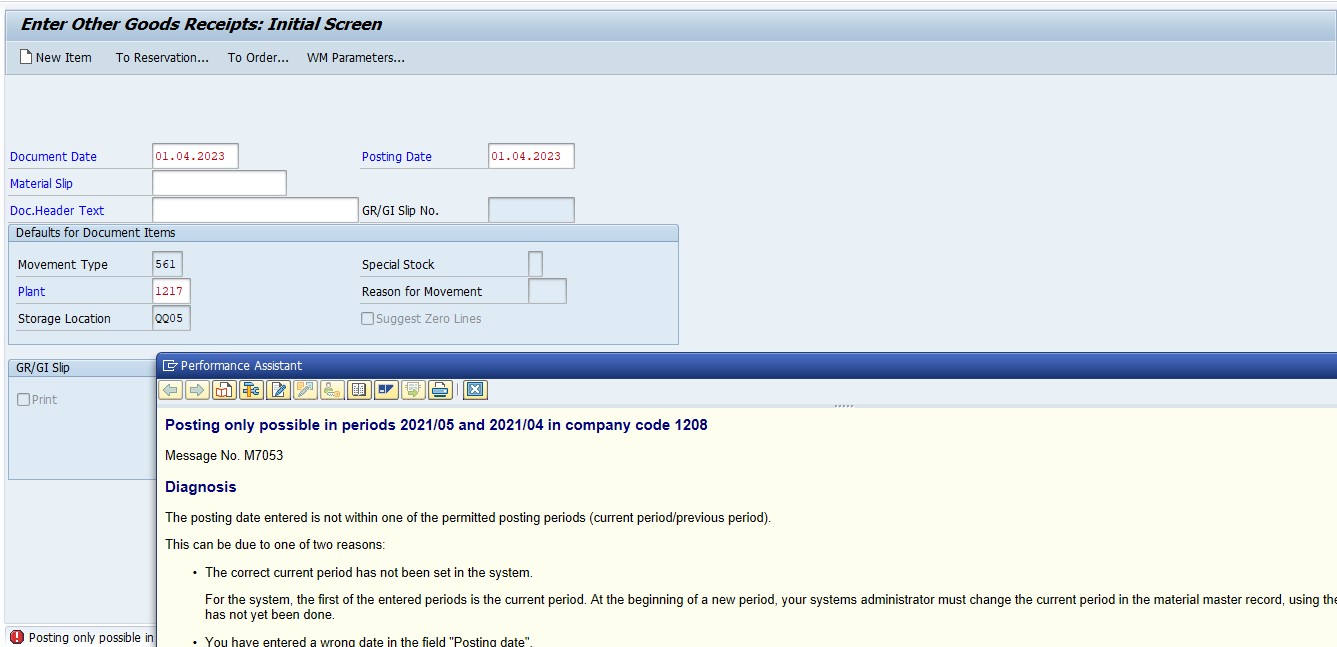
The error "Posting only possible in periods [current period] and [previous period] in company code [X]" means the Materials Management period for that company code hasn't been advanced to the current month yet. This guide covers the exact fix using MMRV, MMPV, and OMSY, then explains a commonly confused point: this is a Materials Management period, not the same as the Financial Accounting posting period controlled by OB52. If you encounter any errors in SAP, feel free to send a screenshot to pramod@learntosap.com for help.
✅ Fix: Posting Only Possible in Periods (SAP MM)
🔧 Follow These Steps
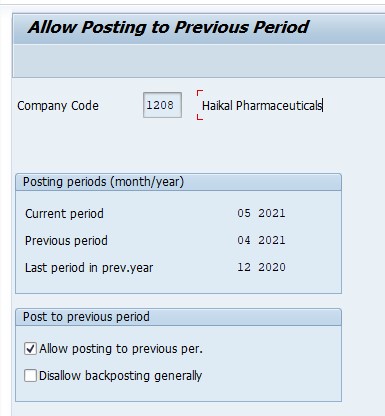
Go to transaction MMRV and check the current period status for the relevant company code.
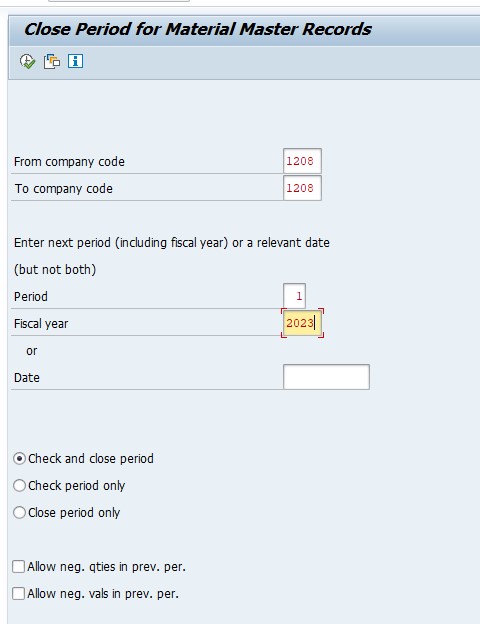
Go to transaction MMPV and execute to close the current period and open the next one.
If you need to directly change the period or year (for example after a data migration or initial system setup), go to transaction OMSY.
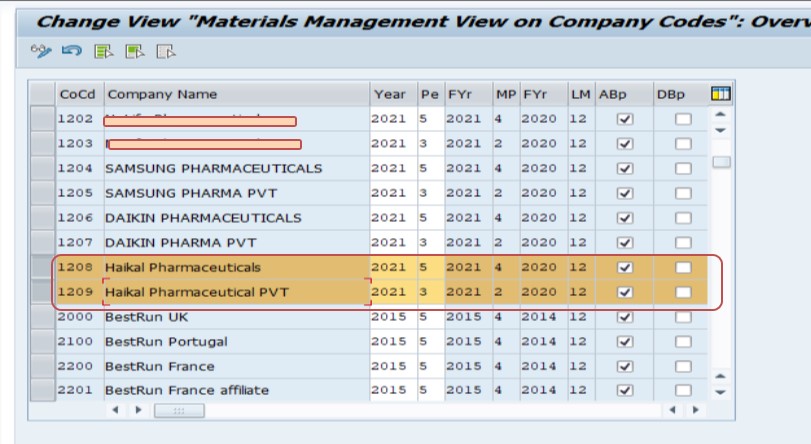
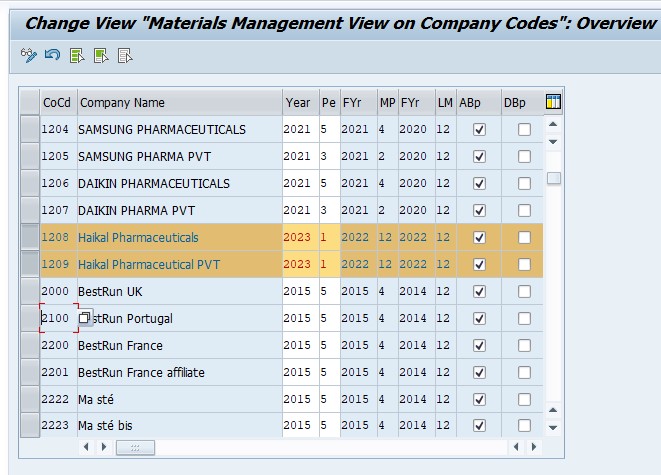
Save.
🔍 Important: This Is the MM Period, Not the FI Posting Period (OB52)
One of the most common points of confusion with this error is assuming it's controlled by transaction OB52, since OB52 is the well-known transaction for maintaining Financial Accounting posting periods. It isn't. This specific error - "Posting only possible in periods X and Y" - is raised by Materials Management's own, entirely separate period concept, controlled by MMRV, MMPV, and OMSY, not by OB52 at all.
SAP actually maintains two independent period concepts that both need to be open for a goods movement with a financial impact to post successfully: the MM period (this guide's focus), which governs whether Materials Management will accept a material document posting at all, and the FI posting period (controlled by OB52), which governs whether Financial Accounting will accept the resulting accounting document. A goods movement can fail because the MM period is closed even though the FI period is wide open, or vice versa - the two checks are independent, and fixing one does not automatically fix the other. If you've tried adjusting OB52 and this specific error persists, that confirms you're dealing with the MM period, not the FI period, and MMPV is the transaction you actually need.
📋 MMRV, MMPV, and OMSY: What Each One Actually Does
| Transaction | Purpose | Changes Data? |
|---|---|---|
| MMRV | Displays the current MM period status for a company code - a check/display tool, not a closing tool | No |
| MMPV | The period closing program - runs consistency checks and advances the MM period forward to the next month | Yes, but through controlled, checked closing logic |
| OMSY | Directly overwrites the current period and year value in configuration, without running MMPV's checks | Yes, directly and without consistency validation |
MMPV is the transaction that should be used for routine, recurring month-end period closing, since it performs consistency checks before advancing the period - among other things, confirming there are no incomplete or erroneous material documents that would be affected by moving the period forward. OMSY, by contrast, bypasses those checks entirely and simply sets the period value directly, which is why it's generally reserved for correcting a genuinely wrong period (for example, right after a system migration or a new company code go-live where the period needs to be set to match a specific starting point) rather than for routine closing.
💼 Real-World Scenario: A Missed Month-End Close Blocking an Entire Company Code
Pooja Mishra, an SAP MM support analyst, received a flood of tickets on the first business day of a new month - warehouse teams across every plant under company code 1208 reported goods receipts and goods issues suddenly failing with "Posting only possible in periods 05 and 04." Given how many users and plants were affected simultaneously, Pooja immediately suspected a period-level issue rather than anything material- or plant-specific.
Checking MMRV for company code 1208 confirmed his suspicion: the MM period was still sitting on the previous month, meaning nobody had run the routine month-end MMPV closing step to advance it. This had previously been a manual task owned by a specific finance operations analyst who had recently left the company, and the handover process hadn't yet included this specific recurring task in the new owner's checklist. Pooja ran MMPV for company code 1208, advancing the period forward after confirming no incomplete material documents would be affected, and the goods movements that had been failing all morning began posting normally again within minutes.
The broader fix here wasn't just running MMPV once - it was making sure the task had a clearly documented, assigned owner going forward, with a calendar reminder set a few days before each month-end to run the closing step proactively rather than reactively, after the business had already been blocked for a business day. This scenario is a common real-world pattern behind this specific error: it's rarely a technical configuration problem, and almost always a routine operational task (period closing) that simply didn't happen on schedule, often following a staffing change or an unclear ownership handover.
✅ Prevention Checklist for Month-End MM Period Closing
- Assign clear, documented ownership for running MMPV at month-end for every company code in the landscape, and confirm that ownership is explicitly included in any staffing transition or handover process.
- Set a calendar reminder a few business days before month-end to run MMPV proactively, rather than waiting for the first failed posting to trigger a reactive fix.
- Check MMRV across all relevant company codes as a quick pre-close verification step, confirming which ones still need MMPV run before the new period begins.
- Coordinate MM period closing with the FI period closing process (OB52), since both need to be open for goods movements with a financial impact to post - closing them out of sync with each other can create its own confusion.
- Document any use of OMSY as a direct period correction, including the business reason, since it bypasses MMPV's consistency checks and should be a deliberate, reviewed action rather than a routine habit.
📋 Related SAP Transactions
| Transaction | Purpose |
|---|---|
| MMRV | Display the current Materials Management period status for a company code. |
| MMPV | Close the current MM period and open the next one, with consistency checks. |
| OMSY | Directly set or correct the current MM period and year value. |
| OB52 | Maintain the separate Financial Accounting posting period (not the same as the MM period). |
| MIGO | Post the original goods movement once the MM period is open. |
| MB5S | Review GR/IR account postings, useful when investigating period-related discrepancies. |
❗ Common Mistakes When Fixing This Error
- Adjusting OB52 (the FI posting period) when the actual problem is the MM period, wasting time in the wrong configuration area entirely.
- Using OMSY routinely instead of MMPV for month-end closing, skipping the consistency checks that MMPV is specifically designed to run.
- Advancing the MM period without first checking MMRV, missing the chance to confirm exactly which periods are currently open before making a change.
- Assuming the fix is material- or plant-specific and investigating individual material masters, when the actual issue is a company-code-wide period setting affecting every plant under it.
- Not coordinating with the FI team when closing the MM period, since a goods movement with a financial impact still needs the FI posting period open as well.
🔗 Cross-Module Impact: Why FI Needs to Be Involved Too
Because most goods movements in SAP MM generate a corresponding financial document, closing the MM period is only half of a complete month-end close from a cross-module perspective. Even after MMPV successfully advances the MM period, a goods movement can still fail if the corresponding FI posting period (controlled by OB52) hasn't also been opened for the new month - meaning MM and FI teams genuinely need to coordinate their period closing schedules rather than operating independently.
A common, well-run month-end sequence closes the previous FI period only after confirming all MM-side postings for that period are complete (since a closed MM period for the new month doesn't retroactively block corrections to the prior period through other means), then opens both the new MM period and new FI period together, ideally on the same day, so users don't experience a gap where one is open and the other isn't. Building this coordination into a documented month-end close calendar - covering both the MM and FI closing steps together - avoids exactly the kind of confusion the OB52/MMPV mismatch in this guide's title correction addresses.
📱 This Error in SAP S/4HANA
The MM period concept, and the MMRV/MMPV/OMSY transactions that manage it, are unchanged in SAP S/4HANA - this remains a Materials Management period distinct from the FI posting period, exactly as in classic ECC. What has changed is that S/4HANA offers Fiori-based alternatives for period-end closing tasks in some releases, including apps that surface period status and closing actions in a more consolidated dashboard view, though the underlying MMPV program and its consistency-checking logic remain the same regardless of which interface is used to trigger it.
🎓 Interview-Style Questions and Answers
Q: What is the difference between the MM period and the FI posting period?
The MM period (managed via MMRV/MMPV/OMSY) controls whether Materials Management accepts a material document posting. The FI posting period (managed via OB52) separately controls whether Financial Accounting accepts the resulting accounting document. Both need to be open for a goods movement with financial impact to succeed.
Q: Why would you use MMPV instead of OMSY for routine month-end closing?
MMPV runs consistency checks before advancing the period, catching issues like incomplete material documents, while OMSY directly overwrites the period value without any validation, making it less safe for routine use and better reserved for direct corrections.
Q: If a goods movement fails with a period error even after MMPV was run, what else would you check?
Confirm the FI posting period (OB52) is also open for the relevant company code and posting date, since MMPV only resolves the MM-side period, not the separate FI-side period check.
📚 Quick Glossary of Terms Used in This Guide
- MM period: The Materials Management period concept, managed via MMRV/MMPV/OMSY, controlling whether MM accepts a material document posting.
- FI posting period: The separate Financial Accounting period concept, managed via OB52, controlling whether FI accepts an accounting document.
- MMPV: The MM period closing program, advancing the period forward with built-in consistency checks.
- MMRV: A display transaction showing the current MM period status without changing it.
- OMSY: A configuration transaction to directly set or correct the MM period and year value.
- Company code: The organizational unit in SAP representing an independent legal entity for accounting purposes, at which level the MM period is maintained.
🎯 Conclusion
"Posting only possible in periods X and Y" is almost always a simple, routine cause: the Materials Management period for that company code hasn't been advanced yet, and running MMPV (after checking MMRV) resolves it in minutes. The one thing genuinely worth remembering is that this is a distinct concept from the FI posting period controlled by OB52 - the two need to be managed together, but neither transaction fixes the other's period. Keep this guide bookmarked for the next month-end close.